Cash Flow Forecasting for SAAS
Cash flow or financial planning has an immediate impact on the efficiency of your business’s operation. Read about cash flow planning basics for SaaS companies.

Cash flow or financial planning has an immediate impact on the efficiency of your business’s operation. Read about cash flow planning basics for SaaS companies.
If you own a seasonal business then you know that your income will ebb and flow throughout the year. Read through this guide for some practical steps to make sure you minimise any off-season cash flow problems.

Cash flow forecasting for SaaS businesses is the process of estimating how money will move in and out of your company over time. Whether you’re running a growing SaaS startup or managing finances in an established business, understanding your future cash position gives you a clear advantage.

Inflation is something that affects us all, whether we own a business or not. The world’s economy can shift in an instant and when costs rise, it can put real pressure on personal finances. Brixx is designed to support you and your business. As a financial modelling and planning tool, it can help you to adapt to financial uncertainty with confidence. Read on to learn more.

Almost every business needs physical resources to keep things running! Whether it’s a vehicle, a laptop, or an office building, these assets exist to help produce the goods or services that your business sells. They also represent your business’ overall value, so understanding how they fit into your financial plan is really important.

Once you’ve created a cash flow forecast, you’re in a great position to start examining future scenarios for your business. In this article we look at 6 common scenarios that almost any business should be modelling.

What is direct costs? Discover how businesses track expenses directly linked to production, from raw materials to labour, and why understanding these costs is key for budgeting, forecasting, and improving profitability.

Chat GPT in accounting helps automate routine tasks like invoice categorisation, report drafting, and basic financial analysis – saving time and improving efficiency without replacing accountants. Read on to learn more.

Most people think of income as a pay cheque, but money can come from many different places. Understanding the different types of income is the first step toward smarter financial planning.

Uncertainty is the biggest problem when it comes to a fluctuating income. You know that money is on the way, but not necessarily when or how much. This makes it harder to commit to expenses, to grow, and even to pay yourself.

Most business owners understand just how important financial forecasting is. Even so, many approach it as a somewhat static exercise. Build a forecast, review it, approve it, and then ignore it until the next financial period! Just how often should you update a financial forecast – and, what does good practice look like?

Using Brixx can help you to understand the impact of your funding decisions. Compare scenarios side-by-side get to grips with your planning.

In 2026, businesses have a unique opportunity to leverage advancements in AI to their advantage. With AI tools once considered a luxury now accessible to small and medium-sized businesses, implementing AI solutions could be the key for taking your business to the next level.

In accounting, a normal balance refers to the side of an account that shows increases, which will either be on the debit side or the credit side. These increases aren’t ‘good’ or ‘bad’, they simply exist to show what is in that account

Owning a buy-to-let property requires due consideration. While there’s the appeal of steady rental income, there are also many points of expenditure to bear in mind. As always, the difference between a positive investment and a financial headache comes down to preparation.

Designed to simplify complex forecasting tasks, Brixx allows accountants to create, manage, and consolidate multiple business forecasts in one streamlined platform.

KPIs help you to measure progress, efficiency, and financial health. By tracking the right KPIs, you gain a clear view of what’s really driving your business, and where to focus your energy next. In this guide, we’ll explore the 10 most valuable KPIs every small business should track, and show you how to model each one easily in Brixx, so you can plan smarter and make confident business decisions.

Overall, a cash flow forecast is a powerful tool that enhances financial planning. It provides businesses with greater control over their finances and helps them navigate through various financial challenges more effectively.

Without proper management of cash flow, a business simply cannot survive. In this blog, we will explore what cash flow forecasting is, why it’s important, and how you can create and automate your cash flow forecast to ensure your business’s financial health and success.

Planning revenue should feel like you’re creating a positive route for success. However, oftentimes, businesses will end up with a plan that’s more of a hopeful guess than a line of clear direction.

Learn how tools like Brixx help accounting firms work smarter, serve clients better, and stay ahead in a fast-changing industry.

A MIS Report (Management Information System) is a set of reports that that provides information to management and other decision-makers in a business. Read on to find out more about these essential financial reports.

Variable cost refers to business expenses that vary directly with the level of output or production. In other words, when a company produces more goods or services, the variable cost increases; when it produces less, the variable cost decreases.

As a new business owner, there will be a variety of financial reports and terms that you may not be aware of. One such example is ledger balance and available balance, which we explore in this article.

The prudence concept is a core accounting principle that means choosing conservative methods to understate assets and overstate liabilities, anticipating potential losses and recognising them early, and only recognizing gains when certain – without estimations or presumptions.
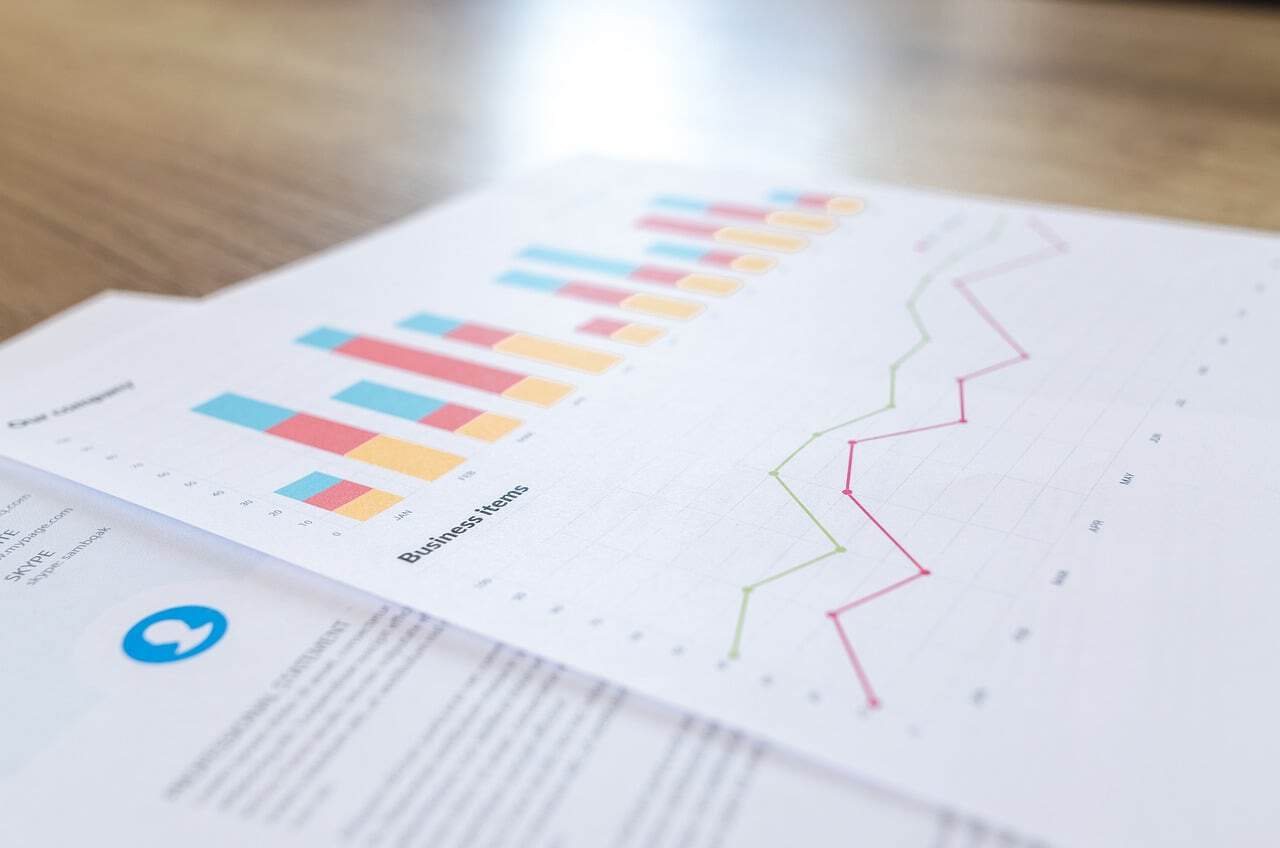
In today’s world, uncertainty seems to be the only constant. From consistent inflation, to global events that ripple through supply chains and consumer behaviour – navigating the future has never been more complex!

The Sortino ratio is a risk-adjusted performance measure that is similar to the Sharpe ratio. Learn why it is important here with Brixx.

Liquidity in business refers to emergency funds and assets that you can access immediately or with short notice. Here we cover the basic concept of liquidity.

The 13 week cash flow forecast is a tool for improving cash management in your business. Dedicating just a small amount of time to plan ahead can have great benefits and in this article we explore how you can take action now to avoid problems in the future.

If you’re reviewing the intricacies of financial reporting or wish to streamline your business’ financial statements, this blog post is your guide to understanding the essence and significance of the FAST standard. Dive in and discover how this standard is revolutionising financial reporting practices and empowering businesses in the finance sector.

Uncertainty surrounds the financial world, and the accounting world is no exception. Navigating doubtful debt is a challenging task, but with the right strategies, it is possible to manage this uncertainty.

Total costs refer to the overall business costs and expenses incurred when creating goods or services. Everything that your business spends to keep its operations running is accounted for within this financial metric.

Any company, SaaS or not, needs to keep track of the cash they have on deck in order to stay afloat. We’ve compiled our top tips for SaaS cash flow forecasting to help your business see increased success.

A Present Value Table is a pre-calculated table used in finance that displays the present value factor for different combinations of interest rates and periods. It’s a useful tool for quickly calculating the present value of future cash flows without having to use a financial calculator each time.

A cash budget is a detailed plan that outlines a company’s projected cash inflows and outflows over a specific period. This financial tool is used to assess whether a business has sufficient cash to operate or whether it needs additional funding.

Startups need watch their burn rate. This article is for you if you haven’t heard the term “burn rate” associated with anything other than exercise before.

The Profit and Loss Statement is probably THE most confusing of the big three financial reports. But why is it confusing? In this article, I’ll demonstrate how the P&L works and give examples of some common confusions 😀

Download a Free Template for Cash Flow Forecast Brixx has created a free cash flow forecasting template to help ease the workload of setting up your cash flow forecasting spreadsheet. If you aren’t aware of how much cash is going in and out of your business then you may have a risk to your business…

Today I’ll explain how the direct and indirect statements of cash flows differ, with examples of each. I’ll also discuss why Brixx uses the method it does.

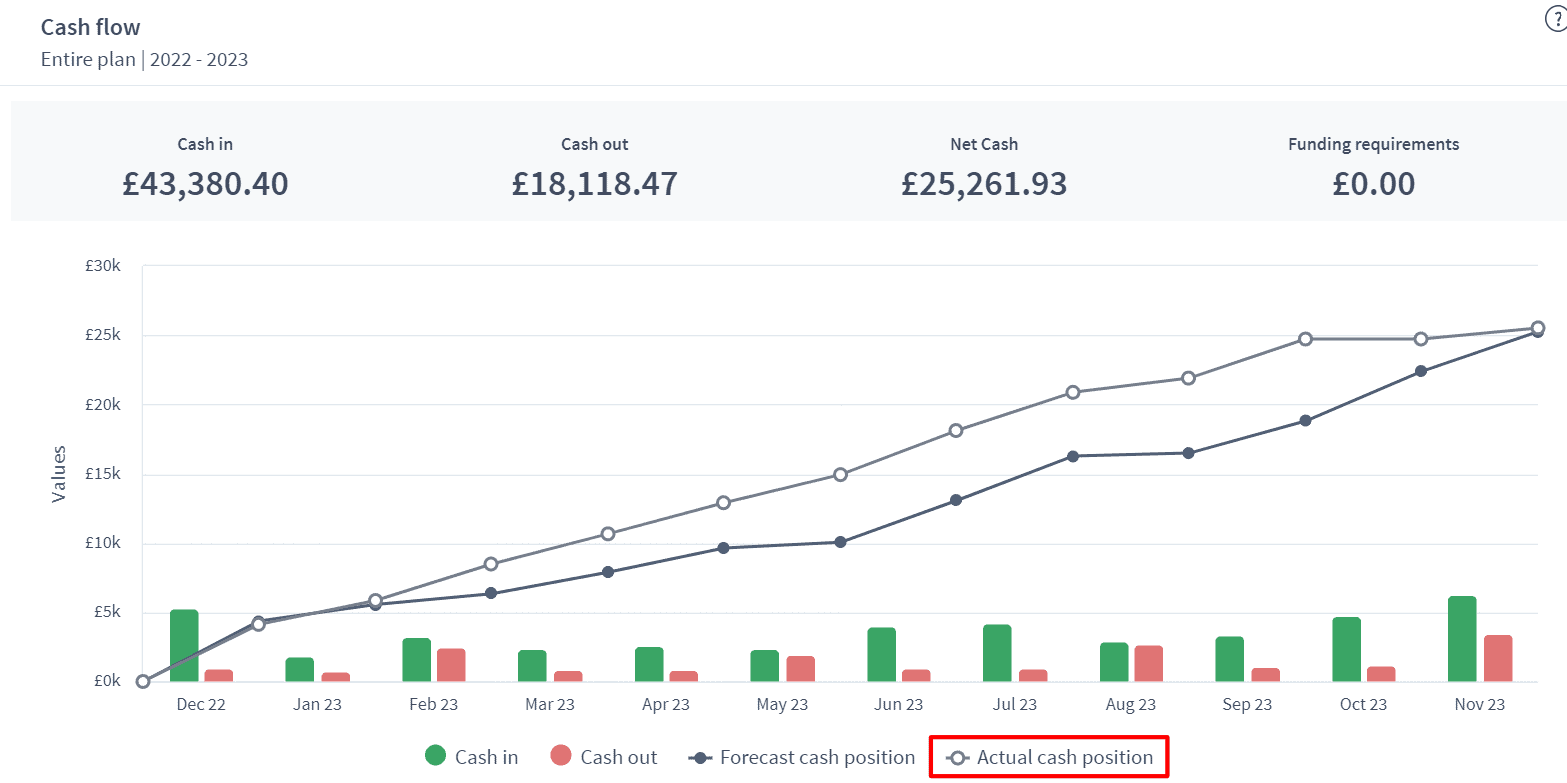
The cash flow statement is one of the more common reports used by accountants. It is a measure of all the incoming and outgoing cash activity of the business and is usually estimated at a monthly level. You may think that all that matters is your profit margin but cash flow is critical. The key difference between a cash flow forecast and another report like the income statement is that it’s all about timing. When cash is parted with or received is vitally important. It will not take into account future sales received on credit. It’s a true reflection of your bank accounts inflows and outflows. Not what might be, but what is.

Within the realm of finance, there are hundreds of different types of formulas, concepts, and reports that you may not be familiar with. Actuals might be one of these. In this article we will provide a clear and simple understanding of actuals in finance, highlighting their significance in assessing true financial performance.
Understanding the difference between a business model and a business plan is crucial for entrepreneurs and business managers. While these two terms are often used interchangeably, they refer to distinct aspects of a business’s strategy and operations.

The Cash Conversion Cycle (CCC) is a crucial financial metric used to evaluate the efficiency with which a business manages its inventory, receivables, and payables. It reflects the time taken to convert resources invested in inventory into cash flows from sales. A shorter CCC indicates a more efficient operation, highlighting quicker inventory turnover and faster collection of accounts receivable.

TAM, SAM, and SOM are acronyms used in business and marketing to define different aspects of market size and potential. They help businesses to estimate the scope of their market at different levels and are crucial in strategic planning and market analysis.

Intangible assets are critical to understanding the true value of a company. Unlike physical assets, which are easily quantifiable, intangible assets are not physical in nature and include things like intellectual property, brand equity, and knowledge capital.

Capital Expenditure, or CapEx, is a critical financial concept in business, particularly relevant in strategic planning and accounting. It refers to the funds used by a company to acquire, upgrade, and maintain its physical assets. These assets include properties, industrial buildings, equipment, and technology.

Vertical analysis is a method of financial statement analysis in which each line item is listed as a percentage of a base figure within the statement. This technique is used to evaluate the structure of individual financial statements (e.g., balance sheet or income statement) and makes it easier to compare financial data across different companies or time periods, regardless of size or volume.

The Price-to-Earnings (P/E) Ratio is a key financial metric used by investors and analysts to determine the relative value of a company’s shares. It indicates how much investors are willing to pay per dollar of earnings, offering a snapshot of market sentiment towards a company’s future prospects.

In this comprehensive guide, we’ll delve into the intricacies of the month-end close process. From understanding its importance to identifying the essential steps and best practices, this guide aims to be a road map for finance professionals. Whether you’re a seasoned accountant or new to the field, you’ll find valuable insights that can help you streamline your month-end activities.

Understanding the concept of price elasticity is vital for businesses. This guide will help you grasp what price elasticity of demand is, why it’s essential, and the various elements that can affect it.

Managing your business’ finances requires a firm grasp of financial concepts. One of these to be aware of is ‘net income.’ Whether you’re an individual striving to create a robust financial plan or a business owner aiming to assess your company’s profitability, understanding how to calculate net income is essential.

Cash collection in accounting is a crucial process that involves the retrieval of funds from various sources, typically including customers, clients, or debtors. Understanding how this process works is paramount for businesses of all sizes, as it directly impacts their financial health, liquidity, and ability to meet financial obligations.

Year to Date, commonly known as YTD, is a term that refers to the period starting from the first day of the current calendar year up to the present day. The concept is frequently used in financial and accounting contexts to measure performance metrics such as revenue, expenses, returns, or earnings over that time frame. YTD provides a snapshot of how well a business, an investment, or an individual is doing financially within a given year.

Choosing the right tool for managing your business finances is a critical decision that could significantly impact the efficiency and accuracy of your accounting processes. The big question is: Should you go for the age-old, tried-and-tested Excel, or should you opt for specialized accounting software tailored for financial tasks? This article aims to explore the strengths and weaknesses of both to help you make an informed decision.

Starting your own business venture can be very exciting, but it often requires a critical ingredient for success: capital. Whether you’re a startup looking to turn your idea into reality or an already established business owner seeking to grow, securing the necessary funding can be an overwhelming tas

In a world where data is at the forefront of all businesses, the ability to understand and communicate data effectively has become a valuable skill. Data is not just numbers; it’s a story waiting to be told, which is where data visualisation comes into play. Read on to learn more about how visualising your data can help your business.

Understanding the worth of your business is not just a matter of numbers. It’s about comprehending the myriad factors that give your business its unique value. Whether you are looking to sell, seeking investment, or planning for the future, a business valuation provides the critical information you need to make well-informed decisions. This guide aims to walk you through why valuing your business is essential and the multiple factors that can affect this valuation.

Financial statements are the backbone of any business, providing a snapshot of its financial health. The three primary financial statements are the Cash Flow Statement, the Income Statement (also known as Profit & Loss), and the Balance Sheet. These reports offer different perspectives on a company’s financial status, helping stakeholders make informed decisions.

Welcome to our comprehensive guide on understanding more about your financial health and how to assess your progress. Whether you’re a seasoned investor or just starting your financial journey, this guide will provide you with the knowledge and tools needed to evaluate your financial situation effectively.

Return on assets (ROA) is a financial ratio that calculates the profitability of a business in relation to its total assets. This ratio is often used to assess how effectively a company is using its assets to generate profit.

Free cash flow (FCF) is a financial metric that quantifies the amount of cash a business generates after accounting for capital expenditures. Capital expenditures, often abbreviated as CapEx, include investments in long-term assets like buildings, machinery, and equipment. Essentially, Free Cash Flow provides a clearer picture of a company’s financial health by showing how much cash is available for various purposes such as reinvestment in the business, debt repayment, or distribution to shareholders.

One of the most valuable tools in a business owner’s arsenal is the Section 179 Deduction. If you’re a business owner or a financial manager looking to optimize your tax strategy and save significantly on your expenses, understanding the ins and outs of Section 179 is absolutely crucial.

In this article, we’ll explore what exactly revenue bridge is, and why it holds a pivotal role in financial analysis. Whether you’re a seasoned financial analyst or a business owner looking to gain a deeper understanding of your company’s revenue dynamics, this guide will equip you with the knowledge and tools you need.

Navigating the financial landscape of a business involves various important practices, and one of the most crucial among them is bank reconciliation. This article will introduce you to what bank reconciliation is and why it’s an indispensable part of modern business.

Navigating the complexities of modern business requires a keen understanding of various financial metrics. One such vital tool is the Inventory Turnover Ratio (ITR), a standard gauge that evaluates how efficiently a business manages its inventory. In this comprehensive guide, we’ll peel back the layers of the Inventory Turnover Ratio, helping you to understand its formula, practical tips, and real-world examples.

Understanding how to budget effectively is crucial for any business. In this comprehensive guide, we’ll focus on static budgets—one of the most straightforward yet powerful tools in financial planning. From its definition and advantages to its limitations and practical implementation, we’ve got you covered. Read on to also discover how Brixx software can elevate your static budgeting process.

In the fast-paced world of business, keeping loyal customers can often be as challenging as attracting new ones. Understanding customer attrition, commonly known as churn, is pivotal for businesses striving to maintain steady growth. This article will shed light on what churn is, its significance, and its common causes—providing you a comprehensive overview to grasp this essential business metric.

In the dynamic realm of SaaS businesses, financial forecasting isn’t just beneficial—it’s vital. Among these numerous metrics and KPIs. the SaaS magic number stands out prominently. It offers a succinct snapshot of a company’s operational efficiency, linking sales and marketing efforts directly to revenue growth. As we dive deeper into the nuances of this critical metric, you’ll discover why it’s a centerpiece in SaaS financial forecasting.

One of the most significant metrics that entrepreneurs, investors, and stakeholders pay attention to is the cash runway. This critical indicator provides insights into how long a company can sustain its operations without fresh external funding. But what exactly is cash runway? And why does it matter? Let’s dive deep.

In this in-depth e-commerce guide we go into the steps and factors that contribute towards a cash flow forecast you can make solid decisions around.

This blog aims to inform you on the concept of a flexible budget, shedding light on its significance, the components, and how it empowers businesses to adapt to changing circumstances while maintaining financial control.

Spreadsheets are ubiquitous for a reason – you can use them for anything! But with increasing complexity comes the danger of human error. In this article, we look at how to avoid making a mess of your cash flow forecast spreadsheet, and suggest an alternative…

The Rule of 40 has emerged as a golden standard across the Software as a Service industry. Often dubbed the “SaaS Rule of 40,” this metric is more than just a number—it offers a strategic roadmap, balancing growth and profitability.

Master your business finances with our comprehensive guide on cash flow KPIs and metrics. Understand key financial indicators, their implications, and how to leverage them for your business success. Dive in to gain deeper financial insights

Capital budgeting enables informed decision-making regarding the allocation of financial resources for projects that contribute to the company’s growth and profitability in the long run.

Capital budgeting enables informed decision-making regarding the allocation of financial resources for projects that contribute to the company’s growth and profitability in the long run.

Whether you’re an established food truck/van owner or you’ve just got the seed of an idea, you’ll know that it’s necessary to create a cash flow forecast if you want a chance at success. Get started now with our in-depth guide.

Small businesses often struggle with cash flow due to several reasons. Some of the most common ones include lack of proper financial planning, unexpected expenses, overestimating sales, and underestimating costs. Additionally, they may also face late payments from customers which can cause a delay in their ability to pay their own expenses.

In this guide, we will provide step-by-step instructions on how to create a comprehensive cash flow forecast specifically tailored for a gardening business

A break-even analysis is a critical metric for businesses as it provides valuable information about the minimum level of activity required to cover all costs. In other words, it helps businesses identify the level of sales required at which they neither make a profit nor incur a loss. This is the break-even point.

Whether you’re starting or you already have a clothing business, one thing which is often overlooked is the financial forecasting aspect of it. In this article I’m going to be covering how to create a cash flow forecast for a clothing business. I’ll cover the key areas with examples of their significance in a clothing business. Then, step by step, I’m going to build a cash flow forecast!

It is crucial to have effective financial planning for the success and growth of any organisation. To achieve accurate and insightful financial analysis, companies often turn to specialized software solutions. Two popular options in the market are Brixx and Poindexter.
In this blog post, we will compare two popular business planning software options: Brixx and LivePlan. By examining their features, usability, and pricing, we aim to provide you with a comprehensive comparison to help you make an informed decision.
In today’s competitive business environment, having robust financial planning software is essential for effective decision-making and long-term success. Two popular options in the market, Brixx and Futrli, offer comprehensive solutions to simplify financial forecasting, scenario planning, and analysis.
Journal entries are the recorded transactions that your business carries out. Every business activity that involves money – sales, purchases, salaries, loans, and more – will lead to at least one journal entry. It is a chronological record of how your business’s money is being spent or earned.

Scenario analysis is a technique used in various fields, such as business, finance, and risk management, to evaluate the potential outcomes of different future scenarios. It involves constructing and examining multiple possible scenarios to understand their implications and assess the associated risks and opportunities.

As a business owner, setting the right prices for your products or services is a balancing act. Price it too low and you might not cover costs or make a profit, price it too high and you risk losing potential customers to more affordable competitors. A crucial element to getting your pricing strategy right lies…

Creditor days, also known as payable days, is a financial ratio that quantifies the average time it takes for a business to pay its suppliers after receiving goods or services. It’s a reflection of the company’s payment policies and cash management strategies, playing a critical role in its relationship with suppliers and overall cash flow.

Sales forecasting provides valuable insights and predictions about a company’s future sales performance. This guide will help you understand the basics of sales forecasting, its importance, factors affecting it, the variety of forecasting models available, and how to create an effective forecast.
As we step further into the digital age, there’s a seismic shift reshaping how businesses handle their financial operations. One prominent force behind this transformative movement is the integration of Artificial Intelligence (AI), specifically Generative Pretrained Transformers like ChatGPT.

Accounting standards are a set of principles and guidelines that all accounting professionals and businesses must follow when preparing financial statements. In this comprehensive blog post, we will delve into the basics of accounting standards.

There are a huge variety of metrics that you will need to have understanding of when starting your own business. Return on Investment (ROI) is one of these metrics that we will be exploring today.

Understanding all elements of cash flow – including retained cash flow – can be quite a tricky task. We are here to help you understand more about how you can use it.

Financial forecasting and planning are essential for any business, big or small. However, traditional financial analysis methods can be time-consuming and resource-intensive. This is where ChatGPT, a large language model trained by OpenAI, can provide a valuable tool to assist your business financial forecasting and planning.

Debt factoring is a financial transaction in which a business sells its accounts receivable, or outstanding invoices, to a third-party financial company, known as a factor.
Debt factoring is a financial transaction in which a business sells its accounts receivable, or outstanding invoices, to a third-party financial company, known as a factor.

The debtor days formula is a useful tool for businesses to understand how long it takes to collect payments or debts. By calculating your debtor days, you can streamline your processes and improve your cash flow.

Understanding cash flow and the differences between cash inflow and cash outflow is critical for managing your business finances with confidence.

As a new business or start-up, there will be some big meetings ahead with your board and shareholders. Without financial expertise, you may be wondering which financial reports are best suited to show that you’re on the right track to building an established, profitable business.

Over December 2022 and Early January 2023, we have released several updates and bug fixes to improve our user experience. Including the introduction of our Tax report, enabling you to view a breakdown of Tax payments for your plan.

A well-built 3-Statement Financial Model helps insiders and outsiders see how various activities of a firm work together to see how decisions impact the overall company performance.

When looking at the retail industry specifically, effective cash flow management can be the difference between success and failure

Here at Brixx, we enjoy a bit of healthy competition and have done some of the heavy lifting for you by researching the leading forecasting software and planning tools available and comparing them to what we have to offer. We compare Brixx vs Float as cash flow forecasting and scenario planning tools

If you’re here, chances are you’re starting – or thinking about starting – a dog walking business . While many see dog walking as a fun side gig, if money is exchanging hands, it’s still a business. But does every dog walking business need a cash flow forecast ? Not necessarily. However, if you’re relying…

Brixx is a financial modelling app – perfect for planning the future of your business. Professional cash flow forecasts at your fingertips.
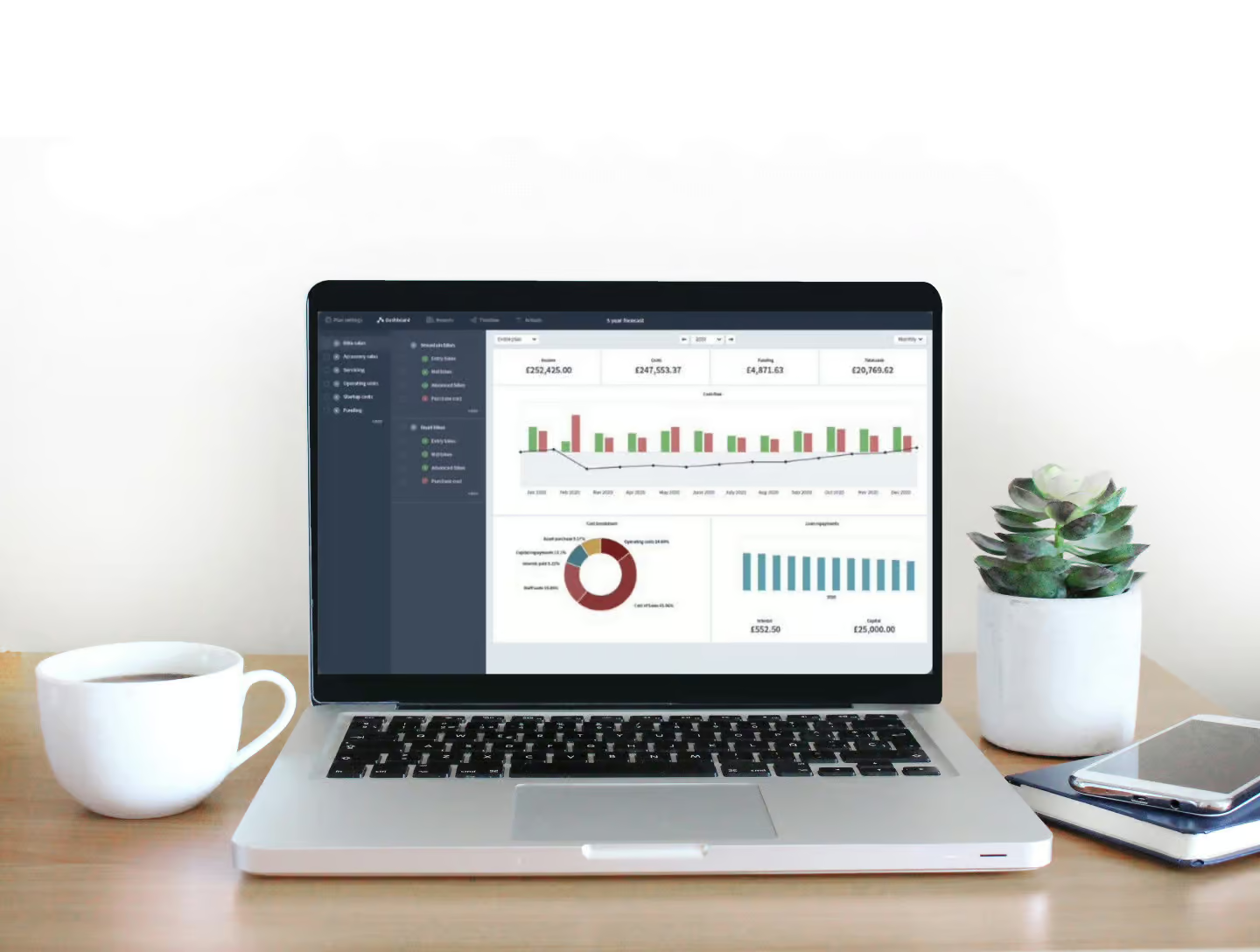
Ever wondered how a business can be profitable but run out of cash? In this article, we cover what is cash and profit and what it means for the health of your business…with examples!

There are two methods of calculating net cash flows, but which should you use? In this article we draw the differences between the direct and indirect cash flow methods and help you decide which method you should use for your cash flow report.

Cash flow from operating activities can be a bit of headache to get your head around. In this article, we break it down and explain what it means, the impact it has on your business and the differences it has over financing and investing activities.

Numbers can be open to interpretation, especially if you’re not used to arcane accounting methodologies. Maybe you usually leave the numbers to the accountant, but if you’re a decision maker, then at some point you’ve got to figure out what it all means. So, today, I’m going to explain some of the common ways cash flow can cause confusion and how you can avoid it.

A cash flow statement brings order to the chaos. Our easy coffee shop example shows how this report can make it easy to understand your business finances. We go through line by line what it all means and where all the important numbers should sit.

This week – plan sharing is finally here! We have just released a host of new features and two new reports – find out more in this post… 😉
Cash flow problems can cause otherwise successful businesses to go bust. This is a truth that bears repeating, which is why this about the third article in which I have repeated it! Small businesses are especially at risk as they may not have reliable access to sources of finance, having to turn to loans to get them out of trouble, which will, in turn, negatively affect their future cash flow.