Financial Forecasting

  • How to Manage Inflation with Brixx

    Inflation is something that affects us all, whether we own a business or not. The world’s economy can shift in an instant and when costs rise, it can put real pressure on personal finances. Brixx is designed to support you and your business. As a financial modelling and planning tool, it can help you to adapt to financial uncertainty with confidence. Read on to learn more.


  • 8 Ways to Improve your Business’ Financial Forecasting

    We have created many informative articles exploring financial forecasting and business planning, and this time we would like to explore how to improve your business forecasts to make better informed decisions going forwards.

  • Researching Your Target Market: A Step-by-Step Guide to Finding Your Audience

    Want to build a product people actually buy? The first step is to research target market data so you understand who your ideal customers are, what they need, and how much they’re willing to pay. This guide explains how to identify your audience, create customer personas, conduct interviews, and use real market research insights to shape smarter pricing and business decisions.

  • What are the Different Types of Income?

    Most people think of income as a pay cheque, but money can come from many different places. Understanding the different types of income is the first step toward smarter financial planning.

  • Forecasting Cash Flow with an Irregular Income

    Uncertainty is the biggest problem when it comes to a fluctuating income. You know that money is on the way, but not necessarily when or how much. This makes it harder to commit to expenses, to grow, and even to pay yourself.

  • How Often Should You Update Your Financial Forecast?

    Most business owners understand just how important financial forecasting is. Even so, many approach it as a somewhat static exercise. Build a forecast, review it, approve it, and then ignore it until the next financial period! Just how often should you update a financial forecast – and, what does good practice look like?

  • Modernising Financial Forecasting for Buy-to-Lets

    Owning a buy-to-let property requires due consideration. While there’s the appeal of steady rental income, there are also many points of expenditure to bear in mind. As always, the difference between a positive investment and a financial headache comes down to preparation.

    Charming women walking on a brick street in front of colourful houses in Brixx, enjoying a casual da.
  • 10 KPIs Every Small Business Should Track (and How to Model Them in Brixx)

    KPIs help you to measure progress, efficiency, and financial health. By tracking the right KPIs, you gain a clear view of what’s really driving your business, and where to focus your energy next. In this guide, we’ll explore the 10 most valuable KPIs every small business should track, and show you how to model each one easily in Brixx, so you can plan smarter and make confident business decisions.

  • The Importance of Cash Flow Forecasting for a Small Business

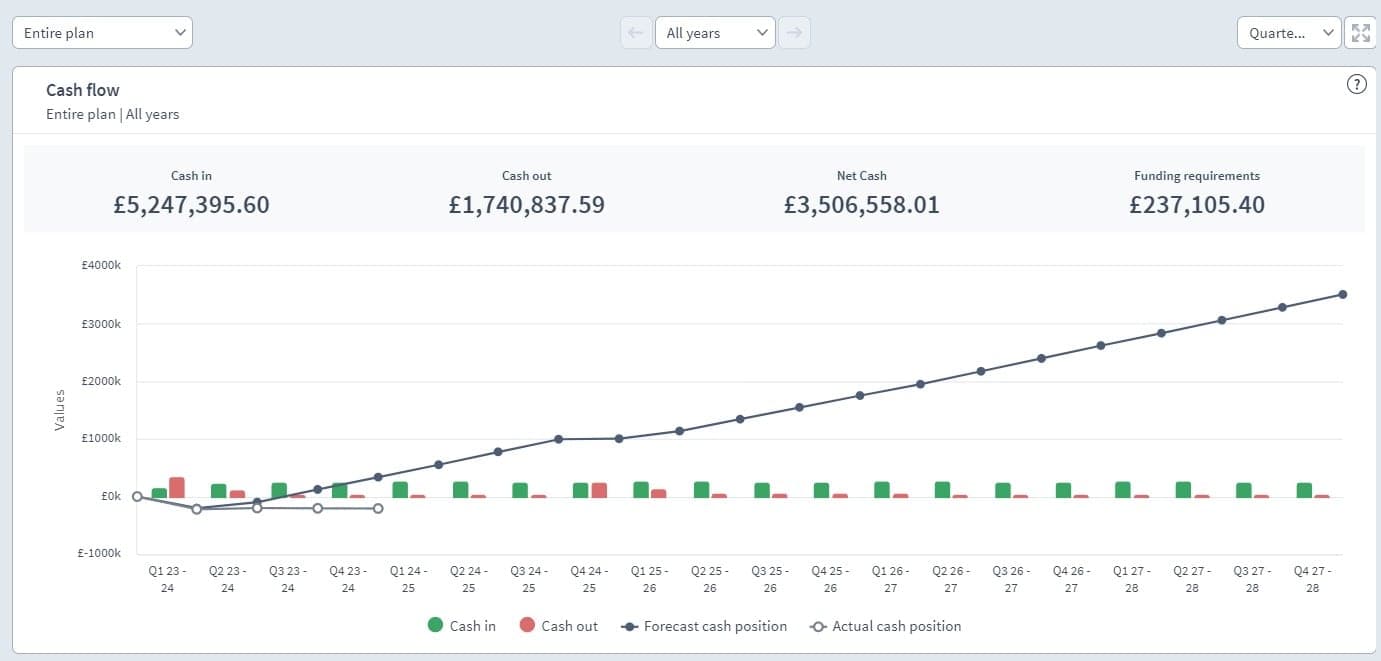
    Without proper management of cash flow, a business simply cannot survive. In this blog, we will explore what cash flow forecasting is, why it’s important, and how you can create and automate your cash flow forecast to ensure your business’s financial health and success.

  • What are Variable Costs? A Simple Guide for Small Businesses

    Variable cost refers to business expenses that vary directly with the level of output or production. In other words, when a company produces more goods or services, the variable cost increases; when it produces less, the variable cost decreases.

  • What is the Prudence Concept in Accounting?

    The prudence concept is a core accounting principle that means choosing conservative methods to understate assets and overstate liabilities, anticipating potential losses and recognising them early, and only recognizing gains when certain – without estimations or presumptions.

  • The Importance of Multilingual Financial Forecasting for Global Businesses

    Financial forecasting is the backbone of any successful business, and having access to forecasting tools in your native language can make all the difference. That’s why Brixx is excited to announce support for eight new languages, making financial planning and analysis more accessible than ever before.

  • The Risks and Rewards of Entrepreneurship: What You Need to Know

    Today we take a look at the risks and rewards of starting a business. Starting your own business can be very rewarding. There are also a number of risks involved in becoming an entrepreneur.  This blog post covers all the problems and joys you might expect to encounter when starting your own business and being your own boss.

  • What is Property Management Accounting?

    Property management accounting is simply the financial process involved in managing rental properties. Without it, it can be difficult to keep the business running smoothly. Learn more with Brixx.

  • Year Over Year (YOY) in Finance: What Does it Mean and How is it Used?

    Year-over-year (YOY) is a financial term used to compare data for a specific period of time with the corresponding period from the previous year. It is a way to analyze and assess the growth or decline of a particular variable over a twelve-month period. Within this article we will explore what YoY is used for and why it is such an important metric for businesses.

  • What is Economic Profit and Why is it Important for Businesses?

    In the world of business, there’s a critical distinction between different types of profit that can impact decisions at every level. One such concept is economic profit – a measure that goes beyond basic earnings to provide a deeper understanding of a company’s financial health.

  • What is a 13 Week Cash Flow Forecast in Accounting?

    The 13 week cash flow forecast is a tool for improving cash management in your business. Dedicating just a small amount of time to plan ahead can have great benefits and in this article we explore how you can take action now to avoid problems in the future.

  • What is Total Cost: A Definitive Guide

    Total costs refer to the overall business costs and expenses incurred when creating goods or services. Everything that your business spends to keep its operations running is accounted for within this financial metric.

  • Forecasting vs Budgeting: Which is best for you?

    This week, we’re looking at budgets and forecasts. Have you ever wondered what the difference is between a budget and a forecast? Or whether you need one or the other, or both? Find out the answers here.

  • Present Value Table: PV Factors from 1% to 20% (with Examples)

    A Present Value Table is a pre-calculated table used in finance that displays the present value factor for different combinations of interest rates and periods. It’s a useful tool for quickly calculating the present value of future cash flows without having to use a financial calculator each time.

  • The Importance of Revision History in Financial Forecasting

    Revision history, a feature often seen in document editing and software development, is vital in financial forecasting tools. In this blog post, we’ll explore the concept of revision history, its critical role in financial forecasting, and the numerous benefits it offers.

  • Can Spreadsheets Still Help with FP&A?

    The spreadsheet still remains a staple across many finance departments. This raises an important question: Can they still help with FP&A? We will explore this notion within our article.

  • What are Rolling Budgets in Finance?

    A rolling budget is a financial planning approach where the budget or forecast is regularly updated by adding a new budget period as the current one expires. It is often referred to as a continuous budget or a rolling forecast.

  • What is Deferred Revenue in Finance?

    Deferred revenue is a critical aspect of financial management. However, it often poses significant challenges in accurate forecasting and tracking. For businesses that offer SaaS products or subscription based services, understanding and effectively managing deferred revenue becomes incredibly important for sustainable growth and financial stability.

  • How to Build a Financial Model: Steps, Tips, and Tricks

    Creating a robust financial model is a critical skill for businesses. Whether you’re a seasoned financial analyst or a new business owner looking to gain a deeper understanding of potential financial situations, building a model provides you with the framework to analyze future financial performance. This article serves as a comprehensive guide to help you to understand the key components of financial models, alongside best practices to set them up.

  • The Importance of a 3-Way Forecast for your Business

    Effective financial planning is absolutely essential for a business’ sustained success. One such tool that can help to empower your business is the 3-way forecast. In this article, we delve into the importance of a 3-way forecast, taking a look at its components, exploring its strategic applications, and highlighting its pivotal role in shaping a resilient and forward-thinking business strategy.

  • What is vertical analysis?

    Vertical analysis is a method of financial statement analysis in which each line item is listed as a percentage of a base figure within the statement. This technique is used to evaluate the structure of individual financial statements (e.g., balance sheet or income statement) and makes it easier to compare financial data across different companies or time periods, regardless of size or volume.

  • Price to earnings ratio: A comprehensive guide

    The Price-to-Earnings (P/E) Ratio is a key financial metric used by investors and analysts to determine the relative value of a company’s shares. It indicates how much investors are willing to pay per dollar of earnings, offering a snapshot of market sentiment towards a company’s future prospects.

  • What is the month-end close process? A complete guide of month-end

    In this comprehensive guide, we’ll delve into the intricacies of the month-end close process. From understanding its importance to identifying the essential steps and best practices, this guide aims to be a road map for finance professionals. Whether you’re a seasoned accountant or new to the field, you’ll find valuable insights that can help you streamline your month-end activities.

  • How to Calculate Net Income (Formula, Steps, and Examples)

    Managing your business’ finances requires a firm grasp of financial concepts. One of these to be aware of is ‘net income.’ Whether you’re an individual striving to create a robust financial plan or a business owner aiming to assess your company’s profitability, understanding how to calculate net income is essential.

  • Cash Collections: Formula, Examples and How to Speed Them Up

    Cash collection in accounting is a crucial process that involves the retrieval of funds from various sources, typically including customers, clients, or debtors. Understanding how this process works is paramount for businesses of all sizes, as it directly impacts their financial health, liquidity, and ability to meet financial obligations.

  • Understand financial health and how to improve it

    Welcome to our comprehensive guide on understanding more about your financial health and how to assess your progress. Whether you’re a seasoned investor or just starting your financial journey, this guide will provide you with the knowledge and tools needed to evaluate your financial situation effectively.

  • 6 Ways Financial Forecasting Isn’t What You Think It Is

    Financial forecasting is a discipline shrouded in mysticism. How do people make predictions and why do people use it if they are never accurate? In this article we delve into these ideas and uncover why financial forecasting isn’t what you think it is.

  • What is Inventory Turnover Ratio?

    Navigating the complexities of modern business requires a keen understanding of various financial metrics. One such vital tool is the Inventory Turnover Ratio (ITR), a standard gauge that evaluates how efficiently a business manages its inventory. In this comprehensive guide, we’ll peel back the layers of the Inventory Turnover Ratio, helping you to understand its formula, practical tips, and real-world examples.

  • What is the Rule of 72 in Finance?

    The Rule of 72 is a fundamental financial concept that provides a quick and easy way to estimate the time it takes for an investment to double in value, based on a fixed annual rate of return.

  • What is a Static Budget in Finance?

    Understanding how to budget effectively is crucial for any business. In this comprehensive guide, we’ll focus on static budgets—one of the most straightforward yet powerful tools in financial planning. From its definition and advantages to its limitations and practical implementation, we’ve got you covered. Read on to also discover how Brixx software can elevate your static budgeting process.

  • What is a Flexible Budget in Accounting?

    This blog aims to inform you on the concept of a flexible budget, shedding light on its significance, the components, and how it empowers businesses to adapt to changing circumstances while maintaining financial control.

  • What is Incremental Budgeting in Finance?

    Capital budgeting enables informed decision-making regarding the allocation of financial resources for projects that contribute to the company’s growth and profitability in the long run.

  • What is Break-Even Analysis: Calculating Break-Even for your Business

    A break-even analysis is a critical metric for businesses as it provides valuable information about the minimum level of activity required to cover all costs. In other words, it helps businesses identify the level of sales required at which they neither make a profit nor incur a loss. This is the break-even point.

  • How to Create a Cash Flow Forecast for a Clothing Business

    Whether you’re starting or you already have a clothing business, one thing which is often overlooked is the financial forecasting aspect of it. In this article I’m going to be covering how to create a cash flow forecast for a clothing business. I’ll cover the key areas with examples of their significance in a clothing business. Then, step by step, I’m going to build a cash flow forecast!

  • Brixx vs Futrli – A Financial Forecasting Tool Comparison

    In today’s competitive business environment, having robust financial planning software is essential for effective decision-making and long-term success. Two popular options in the market, Brixx and Futrli, offer comprehensive solutions to simplify financial forecasting, scenario planning, and analysis.

  • Scenario Analysis: How it Works, Examples and FAQs

    Scenario analysis is a technique used in various fields, such as business, finance, and risk management, to evaluate the potential outcomes of different future scenarios. It involves constructing and examining multiple possible scenarios to understand their implications and assess the associated risks and opportunities.

  • What is Sensitivity Analysis in Finance?

    Financial forecasting & modelling is all about trying to predict the future of your business and sensitivity analysis is just a part of that. Something we’re pretty used to at Brixx!

  • What are Liquid Assets?

    In the realm of finance, liquid assets are the lifeblood of financial flexibility. In this comprehensive guide, we delve into the world of liquid assets, exploring their types, importance, evaluation strategies, and practical tips for maximizing their potential.

  • A Comprehensive Guide to Sales Forecasting

    Sales forecasting provides valuable insights and predictions about a company’s future sales performance. This guide will help you understand the basics of sales forecasting, its importance, factors affecting it, the variety of forecasting models available, and how to create an effective forecast.

  • Improve Your Business Finances with Generative AI Like ChatGPT

    As we step further into the digital age, there’s a seismic shift reshaping how businesses handle their financial operations. One prominent force behind this transformative movement is the integration of Artificial Intelligence (AI), specifically Generative Pretrained Transformers like ChatGPT.

  • What are Accounting Standards?

    Accounting standards are a set of principles and guidelines that all accounting professionals and businesses must follow when preparing financial statements. In this comprehensive blog post, we will delve into the basics of accounting standards.

  • Measuring Return on Investment in Business

    There are a huge variety of metrics that you will need to have understanding of when starting your own business. Return on Investment (ROI) is one of these metrics that we will be exploring today.

  • Retained Cash Flow: What is RCF?

    Understanding all elements of cash flow – including retained cash flow – can be quite a tricky task. We are here to help you understand more about how you can use it.

  • Discounted Cash Flow: A Comprehensive Guide

    Debt factoring is a financial transaction in which a business sells its accounts receivable, or outstanding invoices, to a third-party financial company, known as a factor.

  • Why All Entrepreneurs Should Take Risks

    Risk-taking is an essential part of entrepreneurship, and it’s what sets successful entrepreneurs apart from the rest. In this article, we’ll explore why all entrepreneurs should take risks, the different types of risks businesses face, and how to manage risk effectively.

  • Debtor Days Formula & Calculation

    The debtor days formula is a useful tool for businesses to understand how long it takes to collect payments or debts. By calculating your debtor days, you can streamline your processes and improve your cash flow.

  • What is an Aged Debtors Report?

    An aged debtors report is a financial report that shows the amounts owed to a business by its customers, classified according to the length of time that the amounts have been outstanding.

  • Should You Use Predictive Analytics For Finance?

    Predictive analytics is the prediction of future trends and events using historical data, whereas forecasting is the process of making predictions about how your business will perform over the course of an extended period of time. Which is right for your business?

  • Brixx And Crunch: A Financial Forecasting Masterclass

    The integration between Brixx and Crunch means that you are able to visualise your company’s financial future and see the “big picture” Take a look at this Financial Forecasting Masterclass to see what this integration means.

  • How To Use A 3-Statement Financial Model To Grow Your Business

    A 3-Statement Financial Model is, in essence, a reflection of the three key financial statements. Forecasting those statements allows for the exploration of how a company will perform under a variety of different assumptions to help for growth planning.

  • What is a 3-Statement Model?

    A well-built 3-Statement Financial Model helps insiders and outsiders see how various activities of a firm work together to see how decisions impact the overall company performance.

  • Choosing a Financial Forecasting Template

    A financial projection template is a structured format used to forecast your business’s future financial performance. This template typically includes various financial statements and metrics to help predict income, expenses, profits, and cash flow over a specific period. Learn more about getting started on your projections journey…!

  • 6 cash flow confusions that commonly confuddle business planning

    Numbers can be open to interpretation, especially if you’re not used to arcane accounting methodologies. Maybe you usually leave the numbers to the accountant, but if you’re a decision maker, then at some point you’ve got to figure out what it all means. So, today, I’m going to explain some of the common ways cash flow can cause confusion and how you can avoid it.

  • Financial Jargon Buster Guide

    When it comes to finance, jargon can quickly become confusing. In this piece, we aim to chop this jargon up into digestible, easy to understand definitions with a simple example.

  • Cash Flow Statement Example – Simple Analysis of Cash Flow

    A cash flow statement brings order to the chaos. Our easy coffee shop example shows how this report can make it easy to understand your business finances. We go through line by line what it all means and where all the important numbers should sit.