
Most business owners understand just how important financial forecasting is. Even so, many approach it as a somewhat static exercise. Build a forecast, review it, approve it, and then ignore it until the next financial period!
There are, of course, some errors in this way of thinking. Businesses do not stand still. The markets can change, costs can change, and prior assumptions can shift. If the forecast doesn’t get regularly updated, it will very quickly become almost useless.
So… Just how often should you update a financial forecast – and, what does good practice look like?
What is a financial forecast and why does it date so quickly?
A financial forecast looks into the future of your business’ financial performance. This does not mean that it will be one hundred percent accurate. It will be based on assumptions about the business, like costs, revenue, cash flow, and more. These forecasts are flexible, and can be adjusted to match your circumstances, unlike a budget, for example, which is often fixed and controlled.
Because these forecasts rely on assumptions, they begin to lose accuracy the moment those assumptions change – which happens far more often than most would expect!
Why are outdated forecasts risky?
An outdated forecast may not seem like it would cause any immediate problems – just like a puddle of water on a freezing night. However, this is what can make them so dangerous. Over time, any inaccuracies will compound, and decisions can be made based on numbers that no longer reflect the true nature of the business.
The most common risks include:
- Unexpected shortfalls in cash
- An overconfidence in profitability
- Delayed reactions to declining performance
- Reduced credibility with business partners
These issues usually don’t stem from bad forecasting, but instead are the output of infrequent updates.
Just how often should you update your forecast?
There is no one-size-fits-all practice for updating a forecast. However, there are some options and patterns that can work well for most business types.
Monthly updates: best for growing businesses
For startups and new businesses, monthly forecast updates hit the right balance between effort and accuracy. It allows businesses to review financial data and incorporate any essential changes before trends turn into problems.
Monthly updates also support rolling forecasts, which makes it easier to maintain visibility beyond the immediate financial period.
Quarterly updates: a minimum effort for stable businesses
Businesses that are established and stable often have a somewhat predictable revenue and cost basis (depending on industry type). This means that quarterly updates can be sufficient. Quarterly updates often align well with business reviews and meetings, and can often provide enough oversight without creating an unnecessary workload.
However, quarterly updates can leave gaps in fast-moving environments.
One-off updates: important events require immediate updates
No matter how often you update your forecast, if certain events come into play, businesses will need to immediately review and update. Some examples of these events are:
- An injection of funding, whether by partners or by loan
- New hires or business restructures
- Major pricing updates or product changes
- External factors such as supply chain issues
When the future of the business shifts, the forecast should reflect it immediately.
How to determine the right update frequency?
How often a business updates their forecast depends entirely on how volatile the environment is or how sensitive finances are.
Key factors in frequency include:
The business stage (early-stage businesses will need to update more frequently)
- The predictability of revenue
- Cash runway and burn rate
- Reporting expectations from investors or lenders
- Industry and market volatility
The less predictable the business, the more valuable frequent forecasting becomes.
Rolling forecasts vs. fixed forecasts
Traditional forecasts (fixed forecasts) will usually run to a fixed end, such as the end of the financial year. Often, these are built in a static tool, such as Excel. Over time, this can leave businesses planning against an ever-shrinking future window!
Rolling forecasts avoid this endpoint by continuously extending the forecast horizon, which can easily be done in software like Brixx. The benefits include:
- Always planning with a full forward-looking view
- Less time rebuilding forecasts from scratch
- Faster responses to change
This approach turns forecasting into an ongoing process rather than an annual event.
Signs you’re not updating your forecast often enough
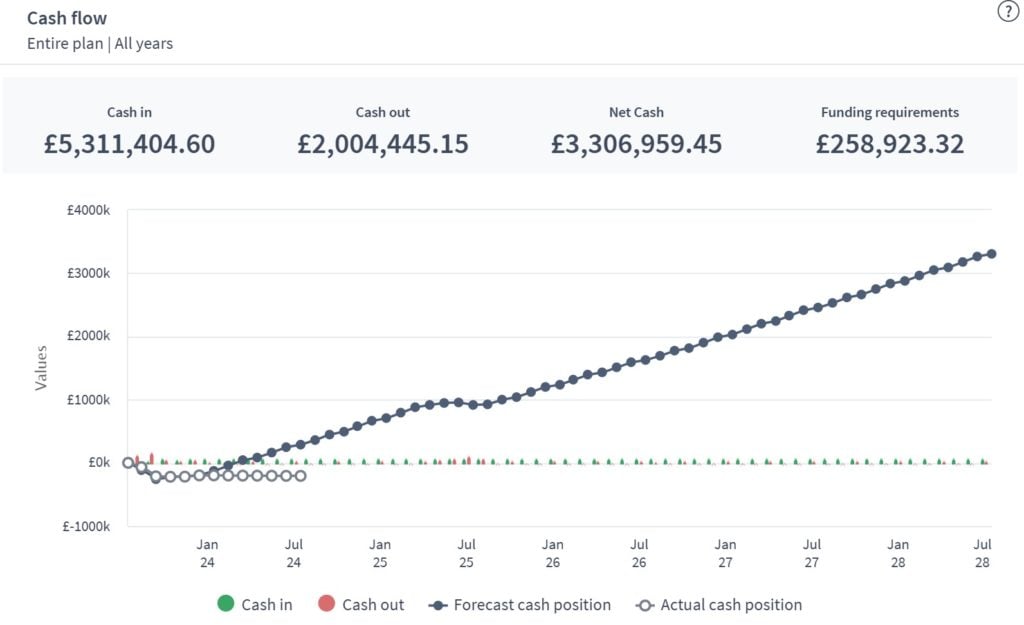
There can be many signs that the business forecast isn’t currently working. If you find that there are large gaps between your forecasts and your actuals, it needs to be updated. If there are surprises in the cash flow – there shouldn’t be! Businesses should be aware of upcoming cash.
Similarly, if when reviewing a forecast it is difficult to answer basic “what-if” scenario questions, an update is needed. This is the same if important decisions need to be delayed because there are unreliable numbers. There are all symptoms of timing, not tooling.
How to make forecast updates easy
It is unsurprising that forecasts will fall behind if it feels painful to sit there and update them. Teams that update and maintain forecasts well are usually doing a few things differently.
- They integrate actuals automatically where possible
- They focus on adjusting assumptions, not rebuilding models
- They use scenario planning instead of single-point forecasts
Modern forecasting tools like Brixx make this approach far more achievable than traditional spreadsheets.
How does Brixx support ongoing forecasting?
Brixx is designed to support continuous financial planning – rather than relying on static forecasts.
Get started today to see how easy it is to update assumptions. Businesses are able to model multiple scenarios with ease, and maintaining clear visibility over cash flow has never been easier. Regular updates in Brixx are simple, day-to-day tasks – they are not a disruption in workflow.
Make your forecast work for you
A financial forecast isn’t something you update because the calendar says so. You update it because your business has changed – which it is always doing!
For most growing businesses, monthly updates provide the right balance of clarity and effort. Quarterly updates may work for those that are more stable, but only when combined with immediate updates after major events. The key is responsiveness.
If your forecast hasn’t been updated recently, it’s worth asking whether it’s still helping you make confident decisions – or if it’s quietly holding you back.
Take a free trial in Brixx to see just how easy it is to update your forecast. Get started today and you’ll thank yourself in the future.

Regularly update your financial forecast in Brixx
Get started with our forecasting software so that you can plan your business' future