How to Fix Off-Season Cash Flow Problems in Your Business

All articles
Summary
If you own a seasonal business then you know that your income will ebb and flow throughout the year. For example, it could be busy in the summer, but slower in the winter. While this could cause some initial income concerns (especially if you’re a startup or new business), the off-season doesn’t have to set you back. In fact, it’s actually a good time to plan ahead and prepare for the future.
Read through this guide for some practical steps to make sure you minimise any off-season cash flow problems.
1. Build a cash flow forecast (12–24 months ahead)
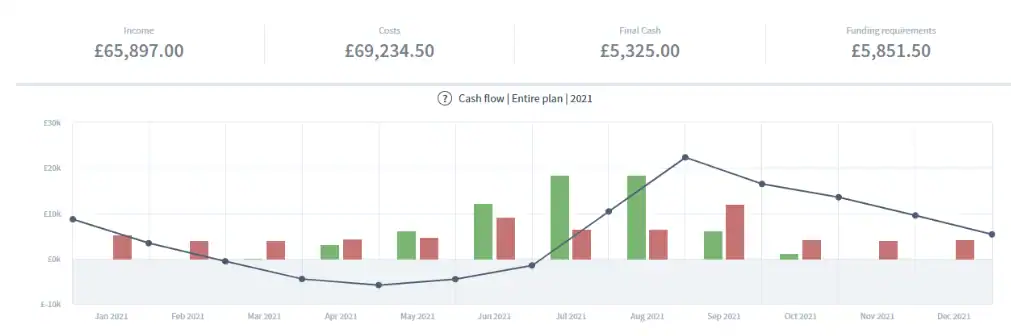
A cash flow forecast is an essential tool in business planning. It helps you to predict how much money will move in and out of your business over a certain period of time.
By creating a forecast, you can get ahead of any potential seasonal cash flow issues. You’ll be able to see when you’ll have a period of low income, and you’ll have the forecast ready to plan accordingly.
Start with these steps:
- Map out your monthly expenses: Identify your fixed and variable costs, especially during off-season months.
- Use any historical data: Review your past sales trends to estimate your future income. If you’re a startup, use industry benchmarks or conservative estimates. There are ways to do this without historical data.
- Extend your timeline: A 12-month forecast is essential for any business, but by extending it to a two-year view you’ll have a much better insight into any long-term patterns and seasonal cycles.
2. Build and maintain a cash reserve
Having cash reserves gives you a strong safety net. It makes sure your business can survive and continue operating even when revenue slows down.
How to calculate your reserve:
- Cover your off-season expenses: Track and add up every cost during low-revenue months.
- Include a buffer: Account for any unexpected issues like equipment problems or potential urgent repairs.
- Set a minimum reserve threshold: Your cash reserve should never fall below this level.
These cash reserves can be the difference between failing and thriving. Having cash on hand means you can solve any issue without it disrupting your sales
3. Diversify your revenue streams
If you just rely on one income source, your seasonal dips will be even more problematic. With additional revenue streams, you can smooth out your cash flow throughout the year.
Ideas to explore:
- Sell branded products: It’s a common occurrence for businesses to merchandise. Create branded clothing or accessories to generate income throughout the year.
- Expand into new markets: If you’re able to, different regions can create new opportunities. Online sales can help enormously.
- Offer subscriptions: Subscription models can provide income during quiet periods.
Before launching anything new, factor it into your forecast to ensure it’s financially worthwhile. Branded hoodies might work, but maybe the cost of production isn’t worth the effort?
4. Reduce off-season expenses
Lowering costs is a good way for any business to save money, but doing so during slower periods of time is one of the fastest ways to improve your cash flow.
Where to cut back:
- Operations: If locations are being unused, simply close them for a temporary amount of time. This will save on utilities and reduce staffing hours.
- Staffing: Use flexible staffing models – hire more during peak times and scale back during slower periods.
- Subscriptions: Pause the software or services you don’t need throughout the entire year.
- Marketing spend: Focus only on campaigns that actually deliver results during the off-season.
Just as importantly, make sure that you don’t overspend across the quieter months. Keep checking your forecast to keep you in line.
5. Plan your inventory carefully
Your inventory choices will directly impact your cash position.
- Overstocking will tie up cash and you risk unsold goods.
- Understocking will lead to missed sales and unhappy customers.
Use data to guide decisions:
- Review your past sales volumes and timing
- Identify any best-selling and slow-moving products
- Factor in supplier times and order minimums

6. Time your capital investments wisely
Capital expenditure (CapEx) includes any major purchases like new equipment or upgrades.
There are two main types:
- Growth investments: These expand your capacity or improve your efficiency
- Emergency replacements: These fix or replace any critical assets
Whenever possible, make sure you plan these purchases in advance. Ideally, this needs to be outside of your peak season to avoid any financial strain. Check your forecast and cash reserve before you commit to new purchases.
7. Use scenario planning to make better decisions
Scenario planning helps you evaluate “what if” situations before making financial decisions. It can be the most helpful part of your forecasting process.
Ask questions like:
- What happens if you increase inventory orders?
- How much do you save by reducing staff hours?
- Will a new investment push you below your safe cash reserve?
By testing different scenarios, you can choose the strategies that improve stability without risking your business.
Perform cash flow forecasts in Brixx
Get started with our forecasting software so that you can plan your business' future
Start your free trial todayPerform cash flow forecasts in Brixx
Get started with our forecasting software so that you can plan your business’ futureStart your free trial today
Make the most of the off-season with Brixx
Fixing your off-season cash flow problems isn’t just about cutting your expenses – it’s about making smarter decisions while looking forwards. The slower months of your business will give you valuable breathing room to review your finances, test different strategies, and be fully prepared for when peak-season comes around again.
If you focus on the areas that we’ve mentioned, like forecasting and building reserves, you can turn those unpredictable seasonal swings into something stable and manageable.
A financial planning tool like Brixx can make this process much easier. With features for cash flow forecasting and scenario planning, you can map out different strategies, see their impact in advance, and make confident decisions before the busy season returns. Make sure to get started with a free 7-day trial.